About me
I'm Nat González and I've dedicated my whole life to music. I was born in Ibiza in 1984, in a home where music was always present: the intensity of Andalusian folklore from my parents, and a universe ranging from new age, opera and classical music to punk, hard rock and grunge from my older siblings. Without realising it, all that mixture was shaping the way I listen to, feel and understand music. Until one day, when I was 13, a guitar appeared at home and one thought stuck: "I have to learn to play this instrument".
And that's where it all began. I started studying modern guitar, which I complemented with music theory, harmony and piano lessons at schools such as Minuet, Taller de Músics and Passatge, while forming my first musical projects and bands. At 20 I discovered the electric bass and, little by little, it became my main instrument, an essential part of how I understand music. I studied with teachers such as Juan Guerra, Enric Gómez, Joan Vigo and Iñaki Marquiegui, to whom I am deeply grateful.
More than 20 years have passed since then, and I'm still learning. I've been part of bands and projects such as Los Seis Días, Manuela Kant, La Quiero Viva, Le Petit Diable, Neverlanders, Maloca and Pararrayos, performing on stages across the peninsula and playing at festivals such as FIB, Cruïlla, Ecopop, FIVECC and Alegría de Chefchaouen (Morocco). I'm currently active with the band Cap Quadrat and other collaborations.
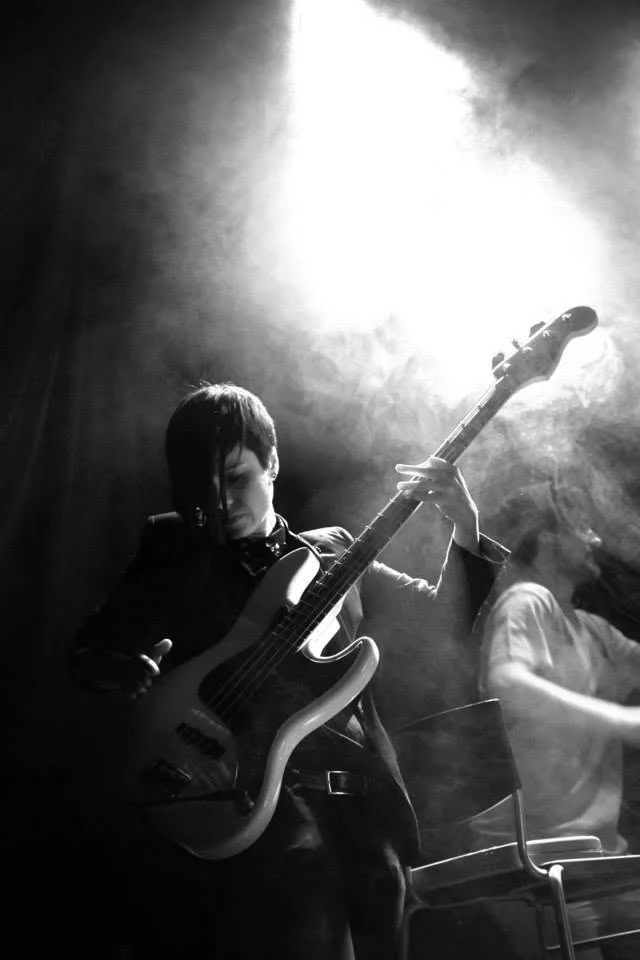
I've also been lucky enough to work and record with musicians and producers I admire greatly. One of the experiences I remember most fondly was recording the album 11 by Micka Luna at Invada Studios in Bristol. Working with producer Suso Saíz on the album Jueves by Los Seis Días, recorded at Music Lan Studios (Girona), was also very important to me.
My curiosity has led me to explore different paths in my education. I took double bass, percussion and drum lessons, and was part of a small theatre company that gave me a lot. I also hold a degree in Music Education (UAB) and a degree in Philosophy (UB).
Perhaps because of this whole journey, I've always felt that music can't be learned in just one way, and that's the philosophy I apply to every bass lesson I teach in Barcelona.
Personalized bass lessons: everyone has their own path
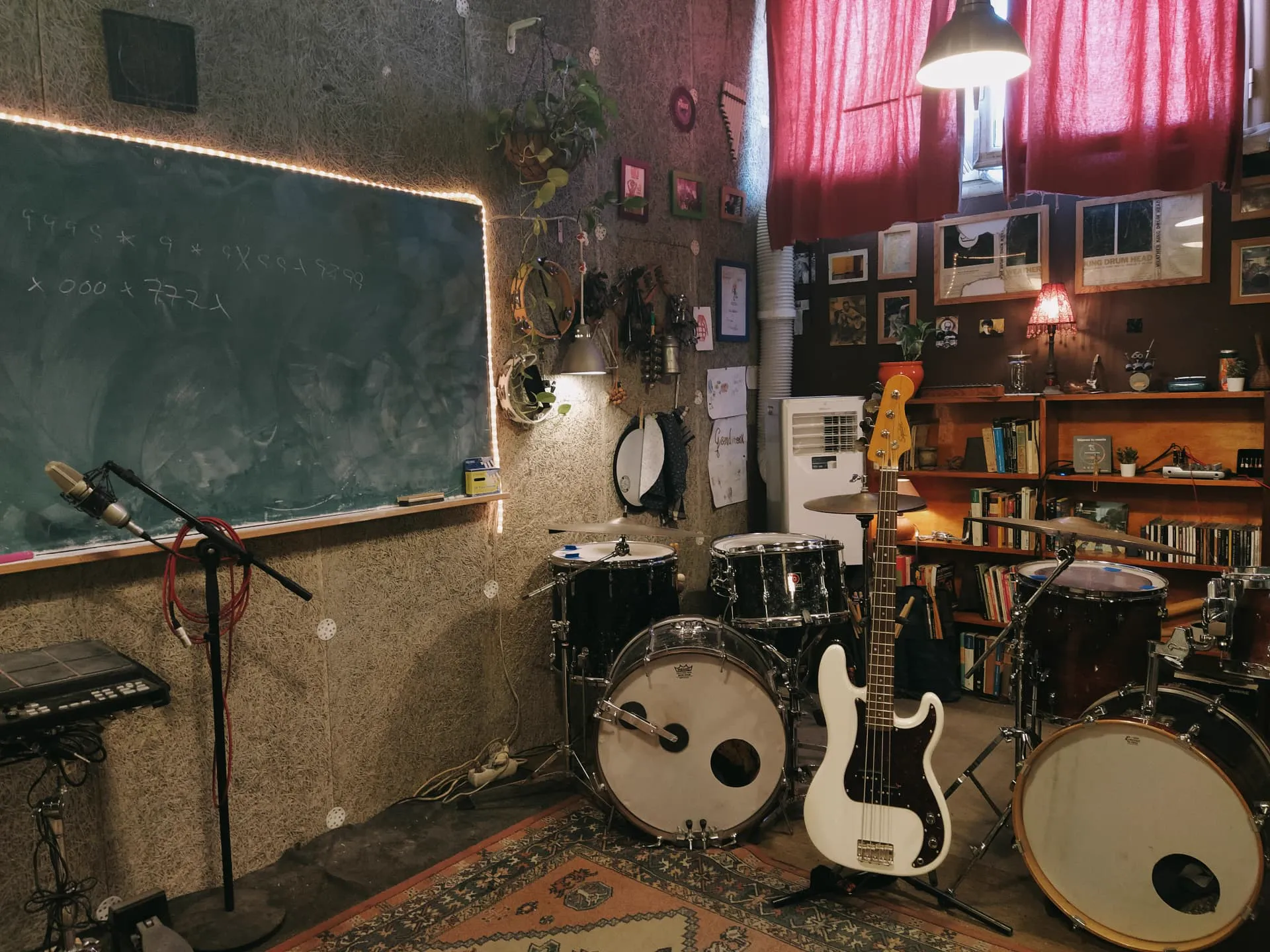
One of the things I enjoy most about teaching bass is accompanying each person on their learning journey. I've worked with students of all ages and levels, from those who had never played an instrument to those who already had experience and wanted to keep digging deeper into the electric bass. Each person arrives with their own tastes, references, goals, experiences and difficulties, and that presents me with something different in each case, because everyone listens to and enjoys music in their own way. That's why I see bass lessons as an open, personalised method.
The first step is getting to know you: what music you listen to, what you'd like to play, what you want to learn and what you hope to find in the sessions. From there, we build the lessons together. We can work on technique, rhythm, groove, harmony or improvisation. Or simply learn by playing the songs you love, discovering new styles or dedicating the lesson time to whatever you feel like playing and experimenting with at that moment.
In the end, what I look for in every bass lesson is for learning to be something personal and dynamic, something you enjoy and, above all, for what we do to make sense to you.
Learning to play bass is also learning to feel the music
There's a moment I especially love as a bass teacher: when a student stops worrying about whether their fingers are in the right place, whether they're making a mistake or what the next move is, and simply starts listening to and feeling what they're playing. When a musical idea connects with something that was already inside them, or a song suddenly starts to sound different. When, all of a sudden, something clicks.
That moment is one of the things I love most about teaching. Because learning to play the bass isn't just about accumulating technique or knowledge. It's also about developing your own relationship with the instrument, learning to listen to others and play with them, and finding your way of expressing yourself through music. That's why I try to make my bass lessons dynamic, friendly and adapted to each person — but above all, a space where you feel like playing and experimenting.